Free shipping on all U.S. orders  ·  60-day trial — full refund, no questions  ·  FSA/HSA eligible
FirstStep
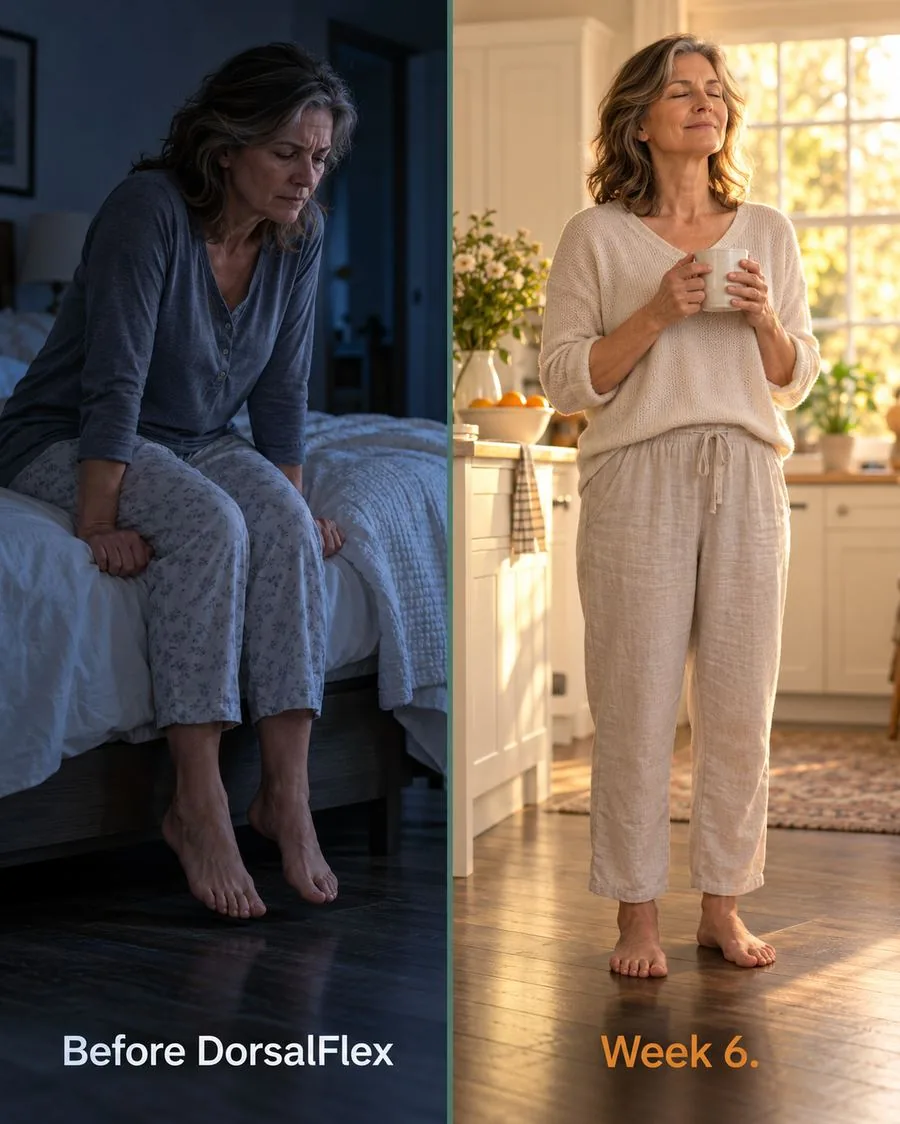
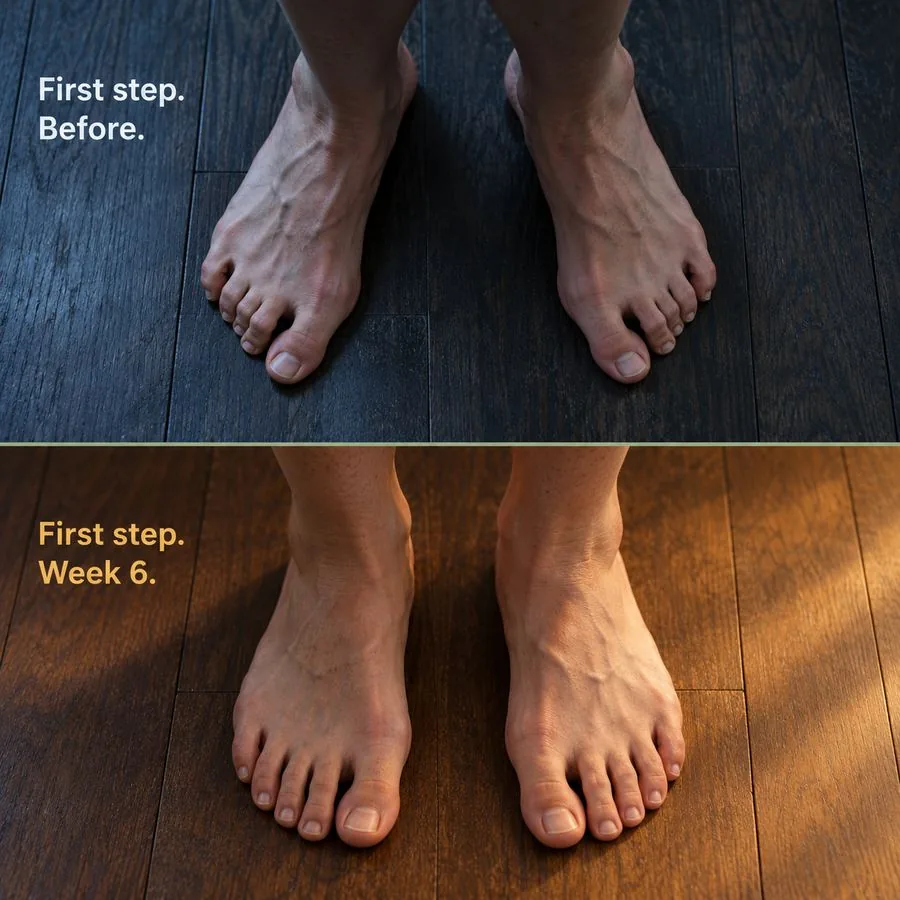
Before DorsalFlex vs Week 6
DorsalFlex annotated product shot
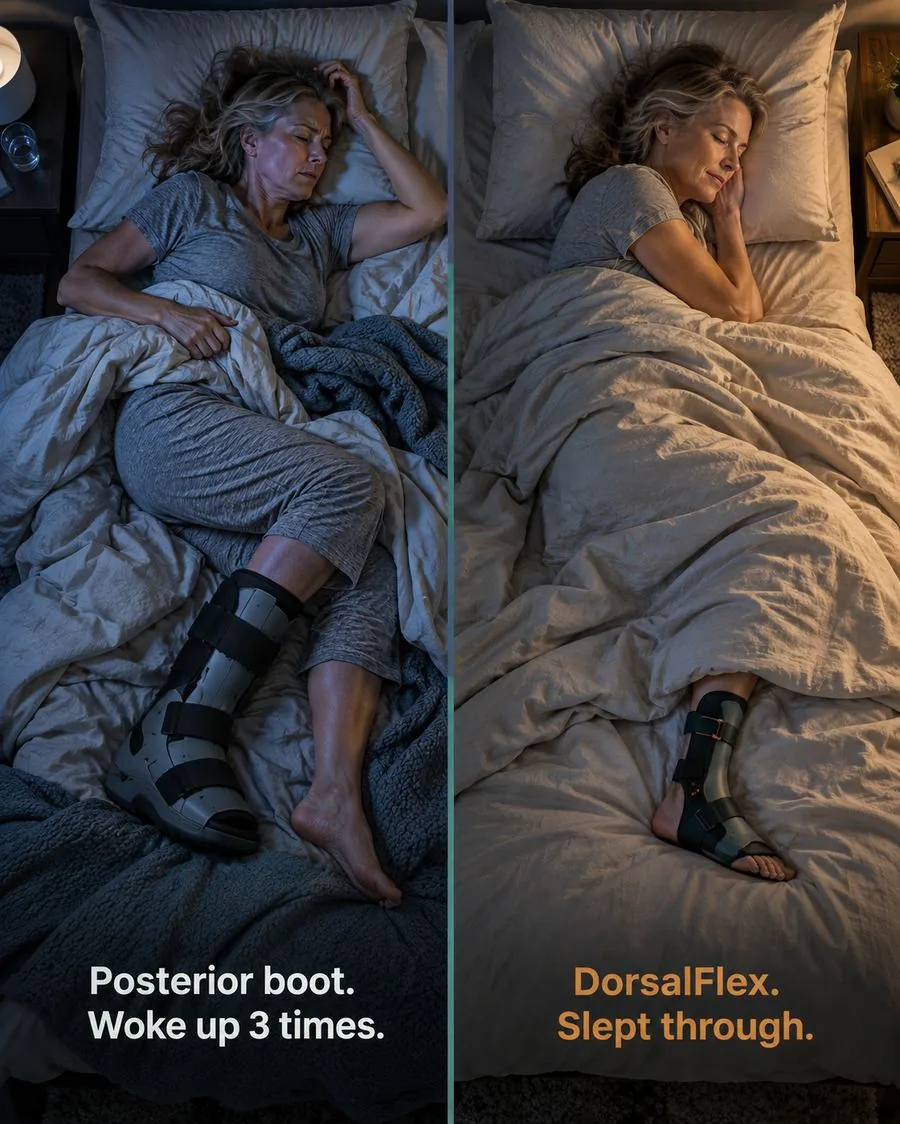
Posterior boot vs DorsalFlex sleep comparison
First step before vs Week 6
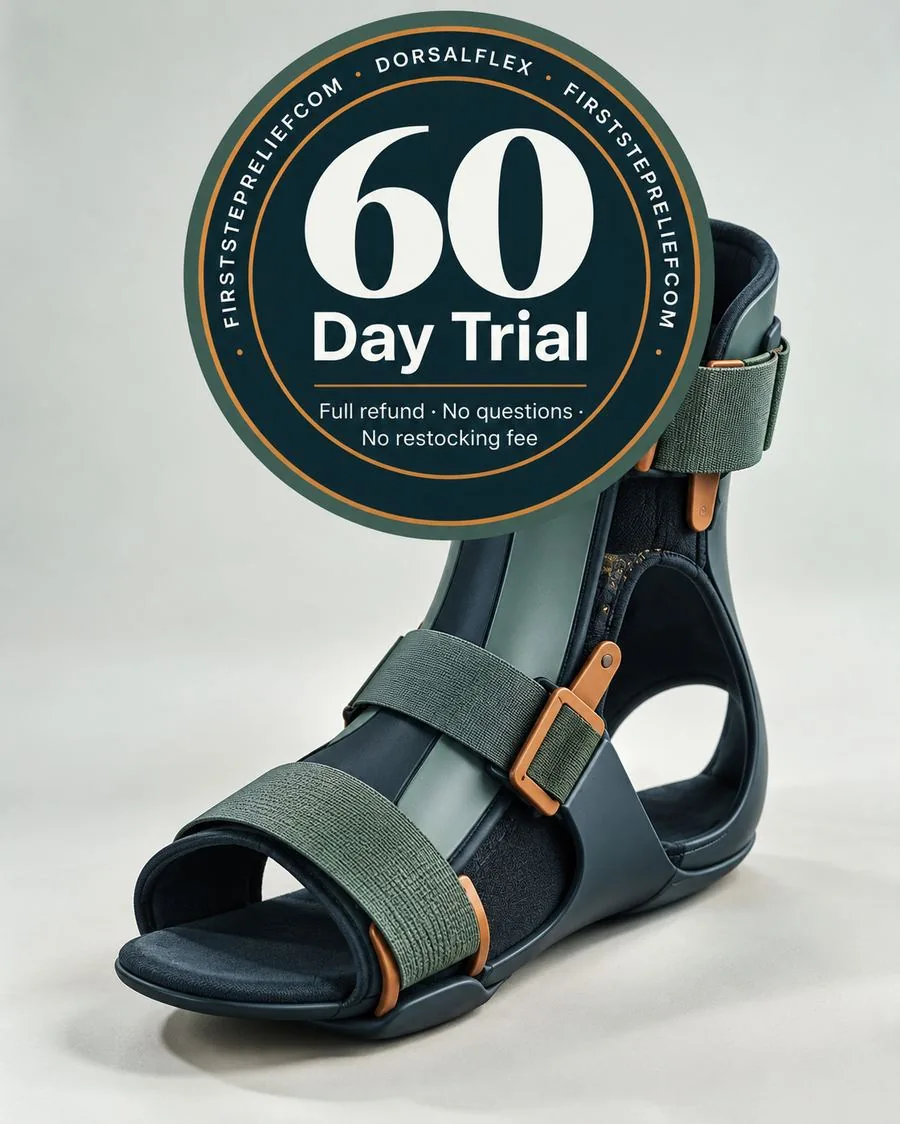
DorsalFlex 60-day trial badge
Before/After
Product
Sleep
First step
Trial
★★★★★ 4.8 / 5  ·  847 verified reviews

The Night Splint You'll Actually Sleep In

Backed by the 2023 APTA Clinical Guideline. Built around the 3 reasons people rip off the standard boot at 2 AM. Most customers feel a real difference in first-step pain by Week 3.

  • ✓Wake up to noticeably less first-step pain — most customers feel the shift by Week 3
  • ✓No toe numbness. No velcro snagging your sheets. No 2 AM wake-ups. Eliminated by design.
  • ✓2-Week Acclimation Protocol included — the night-by-night schedule that makes the difference
  • ✓60-day trial — if your mornings haven't changed, return it for a full refund
$59 Single  ·  Includes splint + protocol + guide
Check Availability — $59 → View Bilateral 2-Pack ($99)

Free shipping  ·  FSA / HSA eligible  ·  60-day full-refund trial
No restocking fee · No questions asked

60-Day TrialFull refund
Free ShippingAll U.S. orders
FSA / HSAEligible
2023 APTAGuideline-backed
Karen P.
★★★★★
Karen P.  ·  Verified Purchaser  ·  9 weeks

By week four, my husband commented that I wasn't limping anymore. I hadn't even realized the limp was gone.

Quick answers

How quickly will I feel a difference? +
Most customers don't notice a change during the first week — that's the adjustment period and it's completely normal. By Week 2–3, most report a meaningful reduction in first-step pain. The full morning shift typically happens between Week 4–8.
Can I actually sleep in this all night? +
Yes — that's the entire design point. Open heel, open toes, smooth exterior with no exposed velcro. Most customers reach full-night wear by Night 5–7 following the included acclimation protocol.
I've tried a night splint before and gave up. +
If you used a posterior boot and abandoned it within two weeks, you hit a design problem — not a concept problem. The DorsalFlex eliminates the specific issues (toe numbness, sheet-snagging, calf pressure) that make the standard boot unwearable.
What's included with my order? +
DorsalFlex™ Adjustable Night Splint + Bedside First-Steps Routine Guide + 2-Week Adjustment Protocol Card. The protocol is the most important part — it's the night-by-night schedule that determines whether the program works.
Week 6 morning kitchen — woman standing at ease with coffee
Woman walking dog in sun-lit park
Where you're headed

Mornings stop being the first thing you dread

First steps
From a 20-minute hobble to walking to the kitchen before you remember to notice.
Daily walks
Back to the walks, the hikes, the dog park — without planning your day around your feet.
Work shifts
Through a full shift without counting down to when you can sit down.
Mental load
Stopping planning your entire day around your foot. That relief alone is significant.

Seven weeks in. The first 20 minutes of my shift are just... normal. That's all I wanted.

— Theresa M., Verified Purchaser · 7 weeks

Why it keeps coming back

You already know what's happening. Nobody told you why the device they gave you couldn't fix it.

You've been told the mechanism. Your foot drops overnight. The tissue along your arch locks tight. You stand up. Full bodyweight. That's the stab.

What nobody told you: the standard posterior boot makes that mechanism nearly impossible to actually use. Not because the concept is wrong. Because the device wakes you up at 2 AM — and a device you rip off at midnight can't do its job by morning.

One patient said something I've never forgotten: "It's hard for those around us to fully grasp just how crippling this pain can be." She'd been told three times to try a night splint. Each time she gave up within two weeks. The concept wasn't the problem. The boot was.

The 2023 APTA guideline is clear: clinicians should prescribe night splints for people with consistent first-step morning pain. Not "may consider." Should. The concept is sound. The device most people get handed isn't.

"The concept is right. The device most people are given makes it nearly impossible to follow through."

Woman sitting on bed edge at dawn, dreading first step
First step before vs Week 6 — feet close-up
Verified purchasers

Don't take our word for it

★★★★★ 4.8 / 5  ·  847 verified reviews
Karen P.
★★★★★
Karen P., 64Verified Purchaser · 9 weeks

I tried two Amazon boots before this. Both went in the closet within a week — one because the velcro shredded my sheets, the other because my toes went completely numb by midnight. This one I wore for three nights before I stopped noticing it was there. By week four, my husband commented that I wasn't limping anymore. I hadn't even realized the limp was gone.

Theresa M.
★★★★★
Theresa M., 57Verified Purchaser · 7 weeks

I work retail — eight hours on my feet. The first 20 minutes of every shift, I was managing the pain just to function. I'd been told to try a night splint for over a year but the one my podiatrist recommended was unwearable. Seven weeks in now. The first 20 minutes of my shift are just... normal. That's all I wanted.

Joyce R.
★★★★☆
Joyce R., 61Verified Purchaser · 8 weeks

It took longer than I expected — I was frustrated at week two when my heels still hurt. But the protocol card said that was normal, so I kept going. Week five was the turning point. I've done three morning walks this week. Each one over 30 minutes. I used to do an hour every day before this started. I'm getting there.

Why everything else hasn't worked

The boot was designed for a clinic. Not for a real bed.

The 2023 APTA guideline recommends night splints for first-step morning pain. It doesn't specify which design. That gap is where most people get lost.
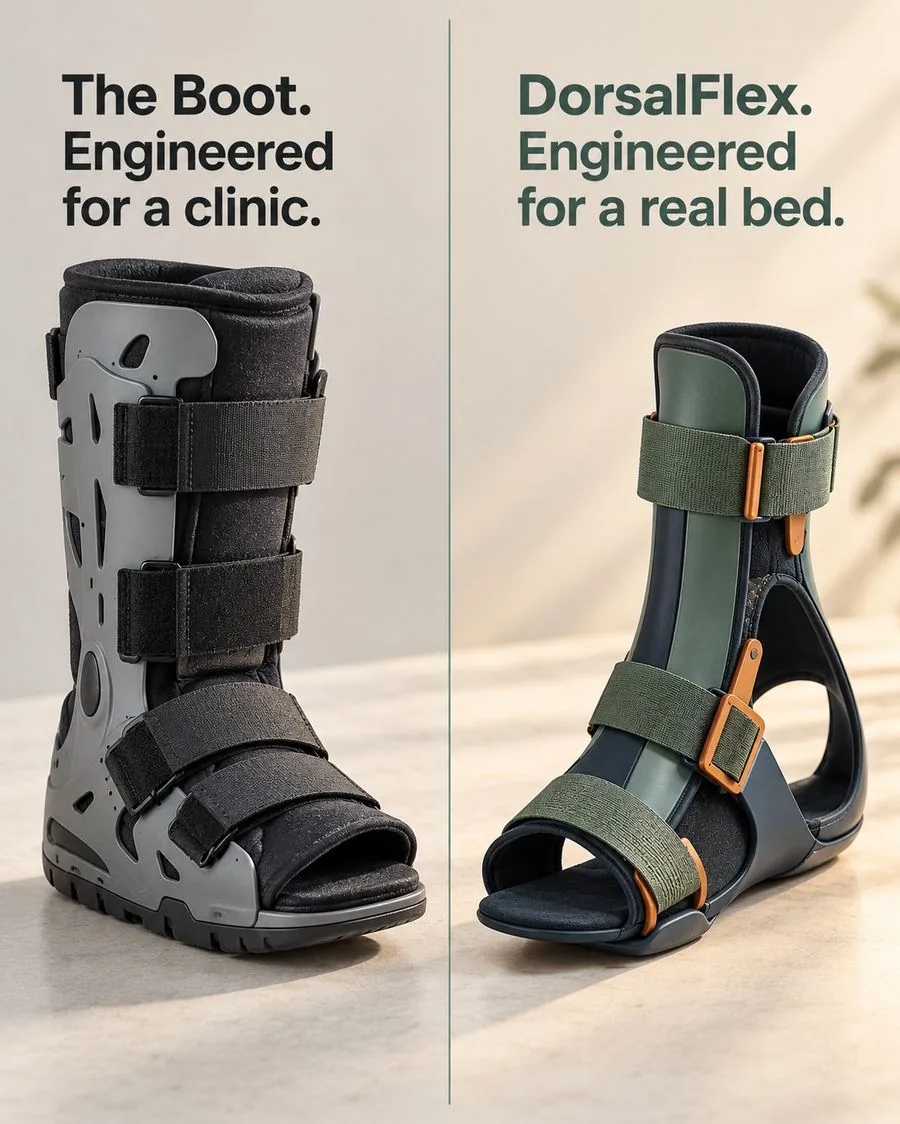
The Boot vs DorsalFlex — engineered for a clinic vs a real bed
Standard Posterior Boot
  • ✗Rigid plastic shell presses into the calf all night
  • ✗Enclosed toe cage causes numbness by 1–2 AM
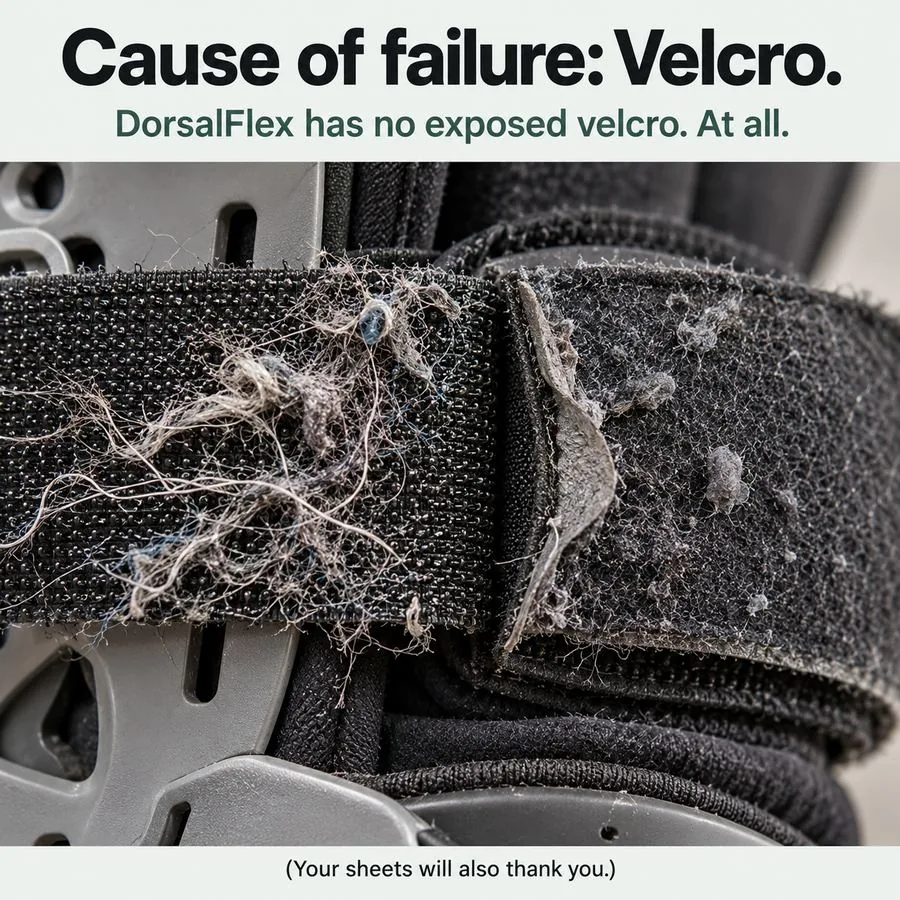
  • ✗Exposed velcro snags sheets every time you roll over
  • ✗Generates heat with nowhere to escape
  • ✗Forces you to sleep completely still or wake up readjusting
  • ✗Majority of patients abandon within 2 weeks
DorsalFlex™ Dorsal Design
  • ✓Front of the shin — nothing pressing into the calf
  • ✓Fully open toes — zero compression, zero numbness
  • ✓Smooth exterior — no velcro on outer surface, no sheet-snagging
  • ✓Open heel and sole — heat escapes, no pressure points
  • ✓Roll over freely — nothing locking your leg in position
  • ✓Includes 2-week acclimation protocol for full-night compliance
Posterior boot woke up 3 times vs DorsalFlex slept through
The design

Why each feature eliminates a specific failure

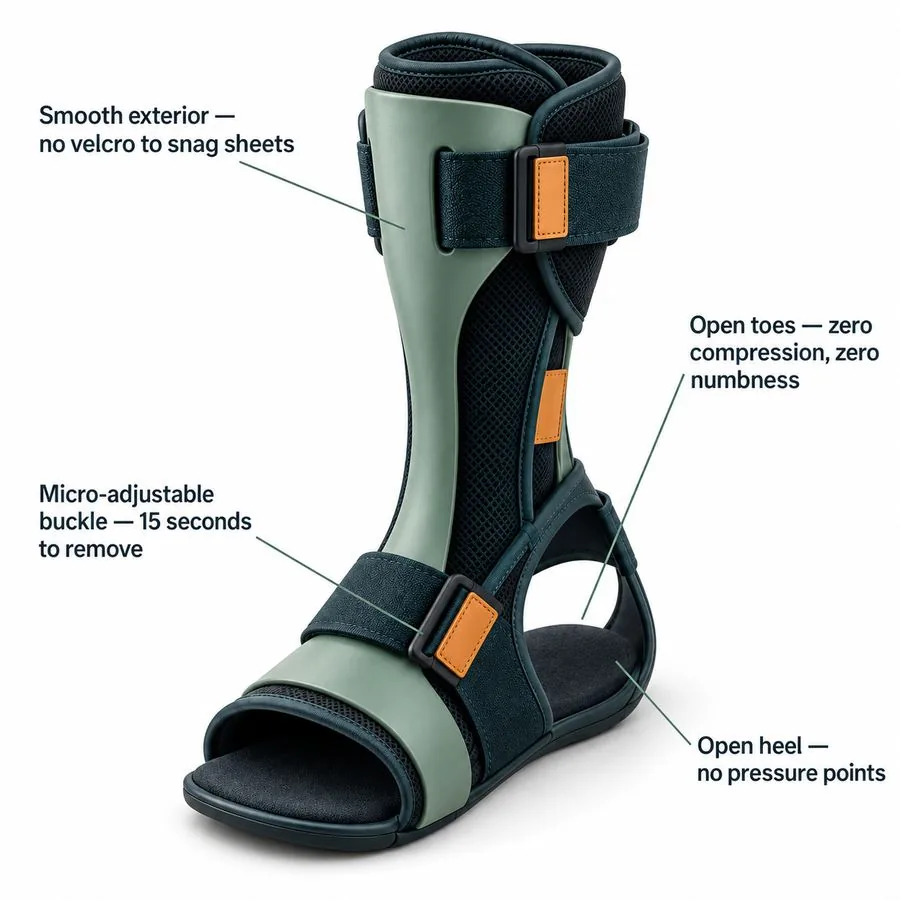
Open Heel & Sole
Nothing against the heel overnight. No heat buildup. No pressure points. People who sleep hot in the standard boot find they can stay in this one.
Open Toes
All five toes free. Zero compression. Zero numbness. Toe numbness is the #1 reason people rip off the standard boot at 2 AM. Eliminated structurally.
Smooth Exterior
No exposed velcro anywhere on the outer surface. Nothing to snag sheets. Roll over freely without waking yourself or your partner.
Micro-Adjustable Tension
Holds at a gentle 0°–5° neutral angle — not 90°. Start wherever is comfortable. Build up gradually. No pressure to hit the target angle on Night 1.

Every one of these design choices exists for the same reason: to keep your foot in that stretched, neutral position for the full eight hours — the eight hours that decide what your first step feels like.

DorsalFlex annotated product shot — open heel, open toes, smooth exterior
Velcro failure close-up — cause of failure: velcro
Rachel Hartman
Rachel Hartman, PT, DPT Lower Extremity Rehabilitation Specialist

For years, I recommended the standard posterior boot to every plantar fasciitis patient with first-step morning pain. The guideline said night splints. The posterior boot was what was available.

Most of them came back: "I tried it. I couldn't sleep in it."

The turning point came when I sourced anterior dorsal splints for patients who'd already failed the standard boot. More patients were getting through the first week. People who'd abandoned the posterior boot by Night 3 were making it through 7 nights in a row with this one on their leg. By Week 3, they were calling to tell me mornings were different.

"Night splints are the treatment. DorsalFlex is the version of it that's actually built to be worn."
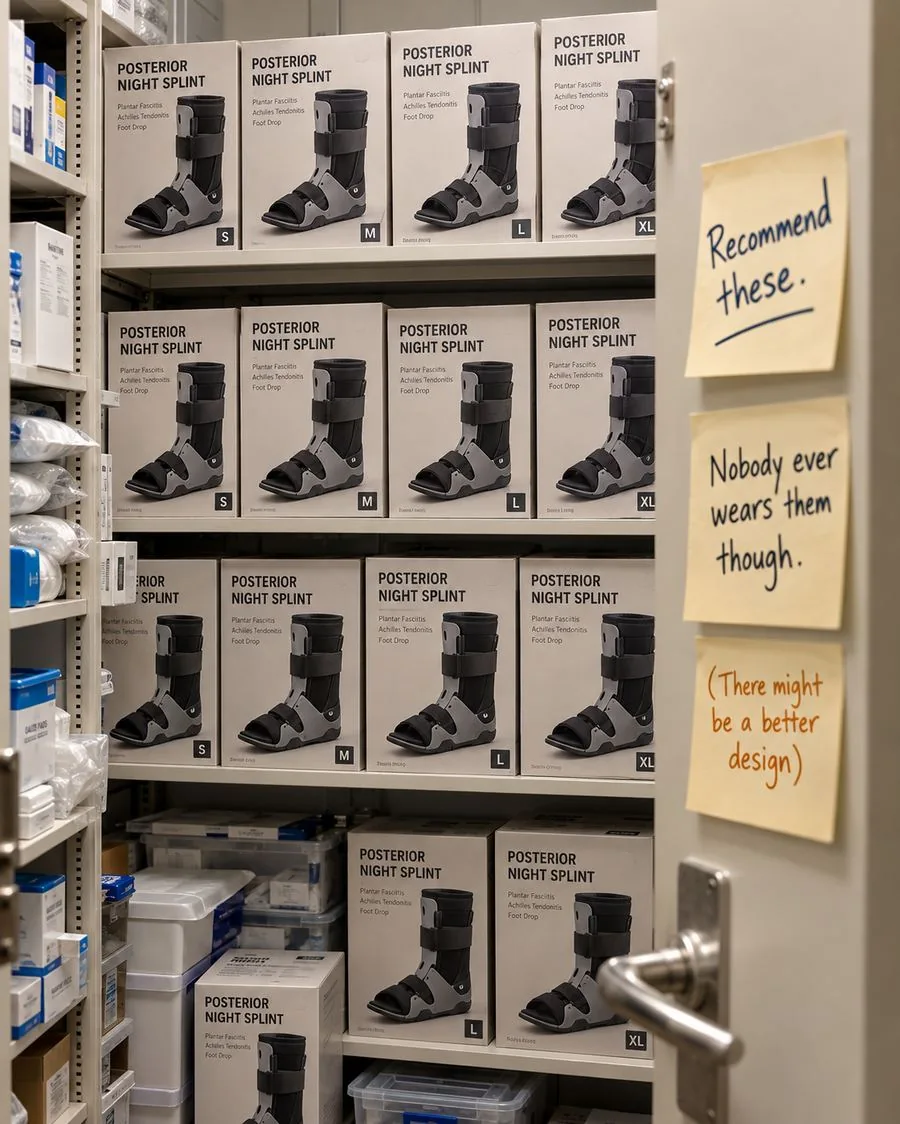
PT clinic supply closet with sticky notes
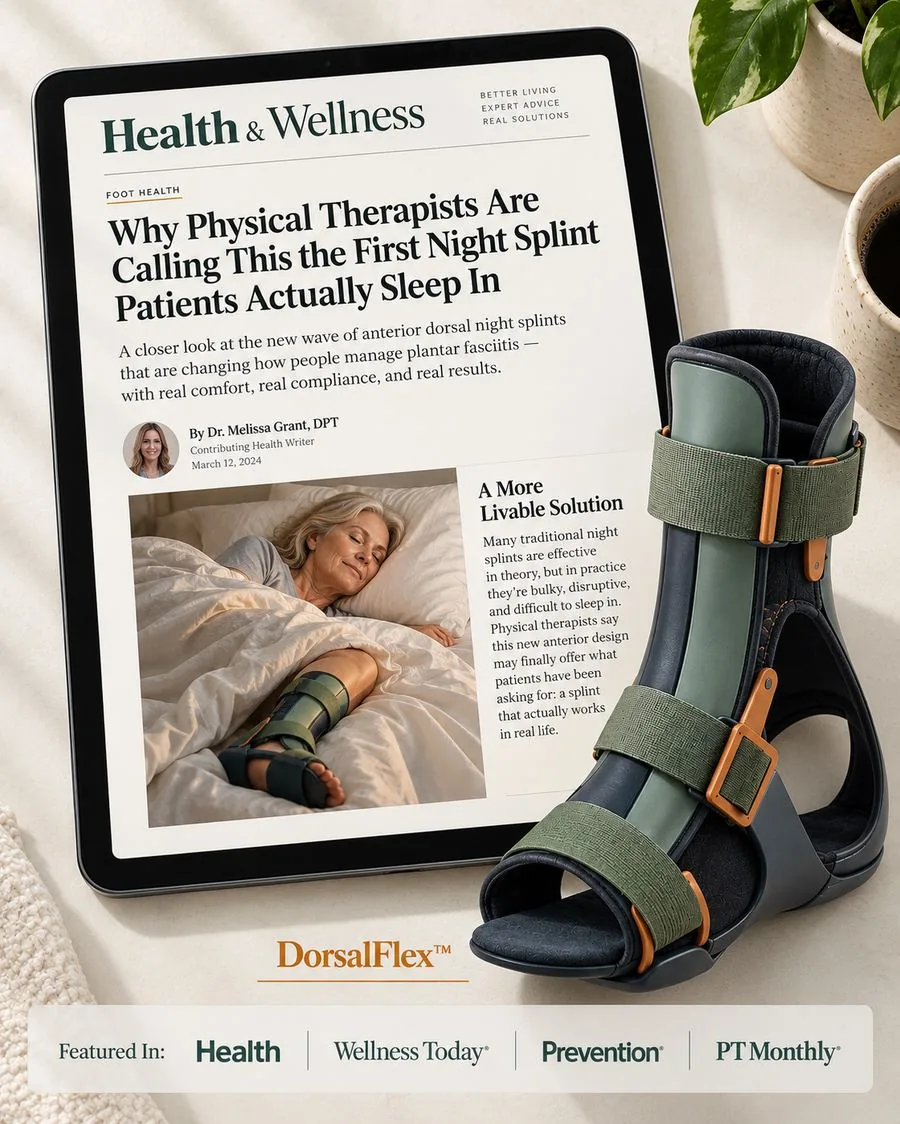
Media credibility tablet showing Health magazine article
Included with every order

The Adjustment Protocol — the part most people never get

Most night splint programs fail for one reason: nobody tells you what Night 1 is supposed to feel like. This protocol does. Night by night.
Phase 1 · Nights 1–7
The Acclimation Week
Start with 1–2 hours per night. Build by 30–45 minutes each night. By Night 7, most people wear it through the night without waking.
↳ Morning pain won't have changed yet. That's normal and expected. Phase 1 is about one thing: teaching your body the device is safe to sleep in.
Phase 2 · Weeks 2–4
The Elongation Phase
Full-night wear begins. Your foot stays in that stretched position — night after night. First-step pain starts to reduce. The 20-minute hobble becomes a 5-minute hobble.
↳ Expect some variation morning to morning. The tissue is in transition.
Phase 3 · Weeks 4–8+
The Morning Shift
Wearing it all night has become routine. Your foot has settled into a new natural position. Mornings stay better. Consistently. Patients say: “I skipped it while traveling and immediately felt the difference.”
↳ Most patients continue wearing it because they know exactly what stopping feels like.
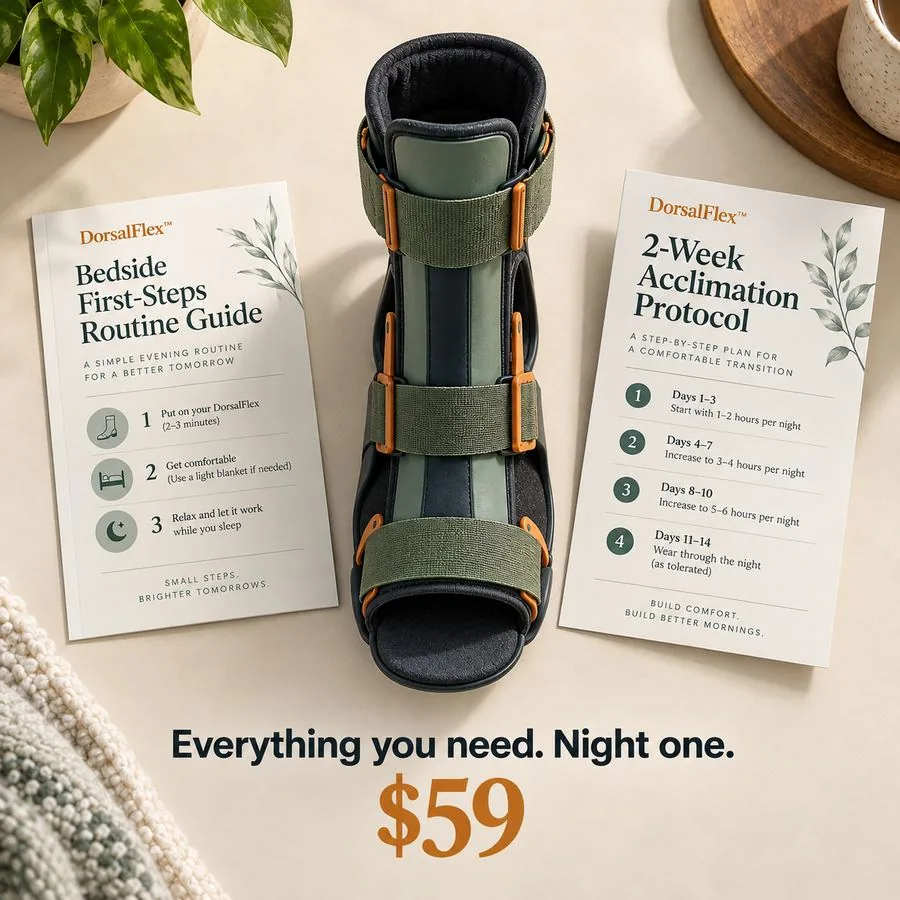
Product flatlay — DorsalFlex splint + Bedside Guide + Acclimation Protocol — Everything you need. Night one. $59
Your order

DorsalFlex™ Morning Relief Kit

Every order includes the splint, the Bedside First-Steps Guide, and the 2-Week Adjustment Protocol Card — the night-by-night plan that makes the difference between a successful program and another abandoned device.

  • DorsalFlex™ Adjustable Night Splint
  • Bedside First-Steps Routine Guide
  • 2-Week Adjustment Protocol Card

Optional add-on at checkout: Arch Compression Sleeves + Bedside Protocol Card for +$19.

60-Day Trial — The Longest Guarantee in the Category

Wear it nightly for two months. That covers the full two-week adjustment period plus four to five more weeks of real results. If your mornings haven't changed in a way that matters to you, return it. Full refund. No questions. No restocking fee.

Single Splint
$59
One foot · Full kit
Bilateral 2-Pack
$99
Both feet · Best value
Check Availability at SleepFlexPF.com → View 2-Pack Option ($99)
↩ 60-Day Trial → Free Shipping ✓ FSA/HSA Eligible ○ Protocol Included
DorsalFlex 60-day trial guarantee badge
Before DorsalFlex vs Week 6

All your questions answered

How quickly will I feel a difference? +
Most customers don't notice a change in morning pain during the first week — that's the adjustment period, and it's completely normal. By Week 2–3 of consistent wear, most report a meaningful reduction in first-step pain. The full and consistent morning shift typically happens between Week 4–8.
I've already tried a night splint and given up. Why would this be different? +
If you used a standard posterior boot and abandoned it within two weeks, you hit a design problem — not a concept problem. The DorsalFlex solves the three specific issues (toe numbness, velcro sheet-snagging, calf pressure) that make the standard boot unwearable. The included Adjustment Protocol also covers the first 14 nights — the part nobody tells you about.
I'm a side sleeper. Will this work for me? +
Yes. The anterior dorsal design sits on the front of the shin — there's nothing rigid pressing against your calf when you roll over. The lightweight profile means you can change positions without waking up to readjust. Most side sleepers find DorsalFlex significantly more manageable than any posterior boot they've tried.
What about bathroom trips in the middle of the night? +
The quick-release buckles let you remove and replace it in under 15 seconds in the dark. A bathroom trip won't undo a full night's work — the fascia doesn't snap back from a 5-minute interruption.
Both my feet hurt. Do I need two? +
Clinical estimates suggest roughly one in three people with plantar fasciitis have it in both feet. The bilateral 2-pack ($99) is worth considering before you order one and realize on Night 3 that the other foot is just as much of the problem.
Why $59 when Amazon has the same thing for $19? +
If you've already tried one Amazon splint, where is it right now? If you tried two, you've already spent $40. Three, and you've spent $60 or more — for devices sitting in a closet. The DorsalFlex costs more than one failed attempt. It costs less than the pattern of replacing the same broken design three times. And the 60-day trial means if this one joins the closet too, you get your money back in full.
Does DorsalFlex come in different sizes? Will it fit? +
The micro-adjustable buckle system fits most adult foot sizes. The straps adjust across a wide range, and the flexible dorsal structure conforms to the shin rather than requiring a precise size match. If the fit isn't right when you receive it, the 60-day return policy covers that too — no questions asked.
What if it doesn't work? +
60-day trial. Wear it nightly for two full months. If your mornings haven't changed in a way that matters to you, return it for a full refund. No questions, no restocking fee, and no time window that expires before you've completed the full adjustment period.
DorsalFlex 60-day trial

Your first ten steps tomorrow morning are decided tonight.

The 2023 APTA guideline recommends night splints for first-step morning pain. The DorsalFlex is the version you can actually sleep in. 60 days to find out — no questions, no restocking fee, no risk.

Single Splint
$59
One foot · Full kit
Bilateral 2-Pack
$99
Both feet · Best value
Check Availability at SleepFlexPF.com → View 2-Pack Option ($99)
↩ 60-day full-refund trial → Free shipping ✓ FSA/HSA eligible
Check Availability — $59 →60-day trial · Free shipping